



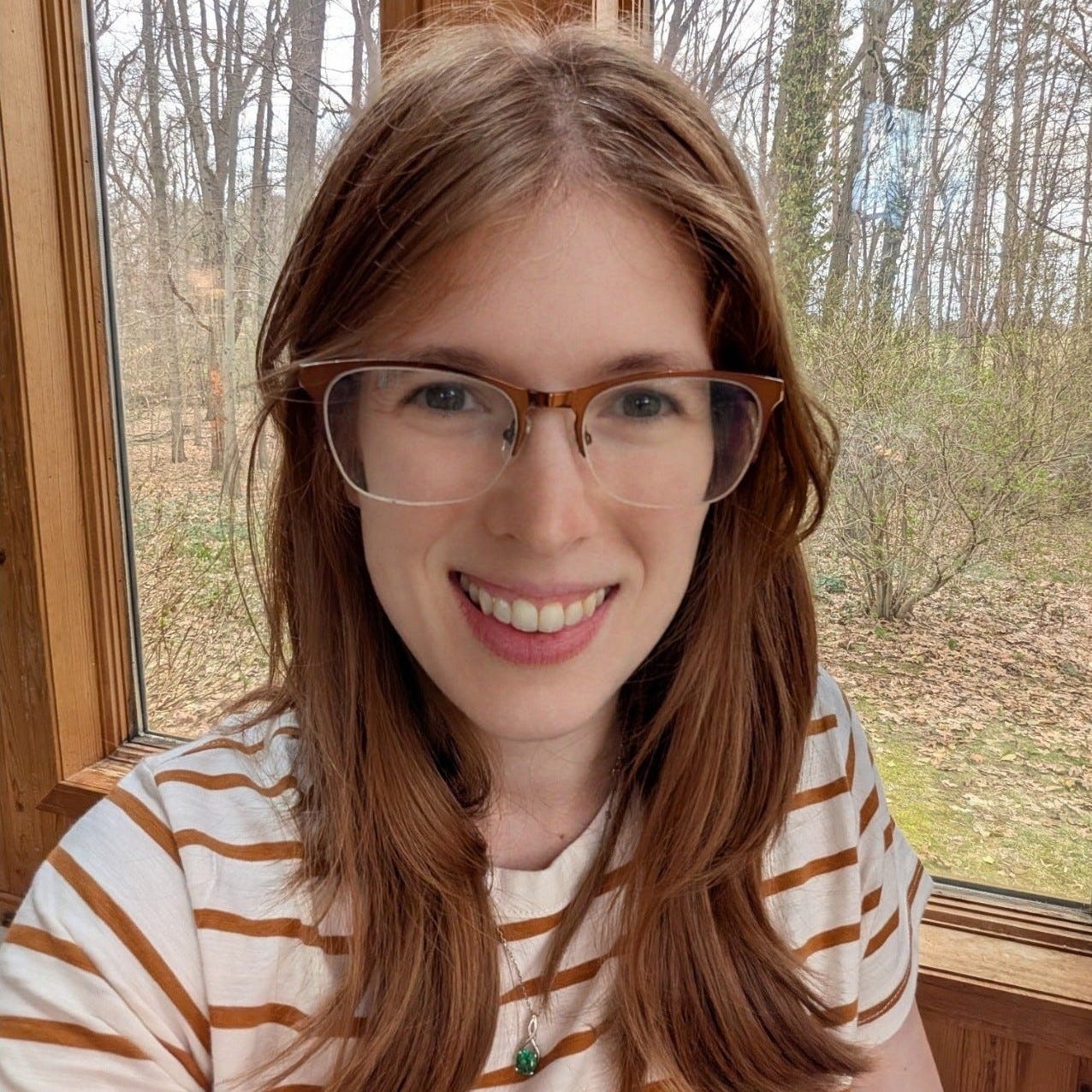
Hello, my first vocation is wife and homeschool mother of three. I am also a therapist with over a decade of clinical experience, adjunct professor of psychology at Cornerstone University and host of The Created Mind Podcast.
As a therapist and professor, I have seen how the abstract ideas of the ivory tower academics are showing up in the things my clients say to me in their deepest moments of suffering. Few people can identify the ideas of Nietzsche, Kant, Carl Rogers or B.F. Skinner yet the core of their ideologies are deeply foundational to the way people understand their mental health, identity, and meaning in life.
For the Christian, I have heard many frustrated with the “quibbling over words” of theologians yet when asked about various doctrines, they often have very clear opinions about many of these subjects which inform their life and practices.
However, the issue is, the fault lines in our foundational ideas, produce massive quakes in our life and faith when the pressure of life in a broken world builds. My husband was diagnosed with Lyme disease at the same time I was feeling at my lowest at the end of my pregnancy with our third child. The past two years have been brutal for us both physically, emotionally and spiritually. No single discipline was enough to bring us healing. By the grace of God, the foundational beliefs he equipped us with have been the difference between bent and broken (a very fine line indeed).
Psychology and the therapy culture coming out of it, are hugely influential not only in public life, not only in the broader culture but also in the church and lives of individual believers. Some Christians are rightly skeptical of the truth claims from this field but swing to the extreme of throwing out the wealth of general revelation God has given us in the study of the human mind. Some Christians rightly understand the value of this revelation but struggle to guard against the false philosophies often smuggled in with the truth.
The Created Mind exists to wade through the various claims coming out of psychology and discern with clarity what is true, useful and good. With conversations grounded in theology and informed by over a decade of clinical experience, I seek to fuel reformation in psychology by recovering a theological grounding for the study of the mind.

One of these foundational ideas which I see deeply impacting my clients is theological anthropology (humanity as defined by God). Specifically, what is man composed of? Are we a body and soul? Body, soul, spirit? Only body? Only a soul with a body? Each of these options have implications for how we understand and treat the various sufferings we face in our fallen world. If simply a body, why bother talking about our problems? Pharmacology must be the only answer. If simply a soul, you must work harder to have enough faith to heal your illness. If only a mind, the sole recourse for healing is beating our thoughts into submission with worksheets and willpower. None of these serve to heal on their own though all have a piece of the puzzle.
And what about those cases that are in between? Our gut microbiome actually houses a large portion of neurotransmitter production so our bodies clearly impact our thoughts. Yet studies have found how thought patterns physically change the structure of the brain. It is clear the unity which exists between these components of ourselves. To me this is a beautiful mystery in the way the Lord created us. I hold to an indivisible unity with meaningful distinctions. We can neither neatly pull apart the components of the human nor collapse them into the same thing. A bit like another key Christian doctrine I know.
All this to say, if you feel that there is more to your health than just your body, just your mind, just your soul, you’ve found your home here. The Biopsychosocial-Spiritual model of health offers a true and useful structure for meeting the needs of the whole human. Whether you are looking to heal yourself, care for others or both, I’d love to chat and work out the ideas and language needed to bridge all these gaps between disciplines and between the practical and ideological to treat the whole human.
More from Ashley

*All views posed on this site belong to the individual authors. Nothing included here on Biopsychosocial-spiritual Care is intended to take the place of medical help or trained counseling. If you are feeling desperate, please reach out to a close friend, family member, pastor, counselor, or health professional such as your primary care doctor or GP. And if you do not feel safe right now and are in crisis then call a crisis line.
In the USA, in an emergency, call 911. If you are in crisis or suicidal and need someone to talk to call the national Suicide & Crisis Lifeline on 988.
In the UK, in an emergency, call 999. For urgent mental health support call 111, complete the form on 111.nhs.uk. The Samaritans are on 116 123.
Other countries have similar crisis helplines, and a list is maintained at Wikipedia.